

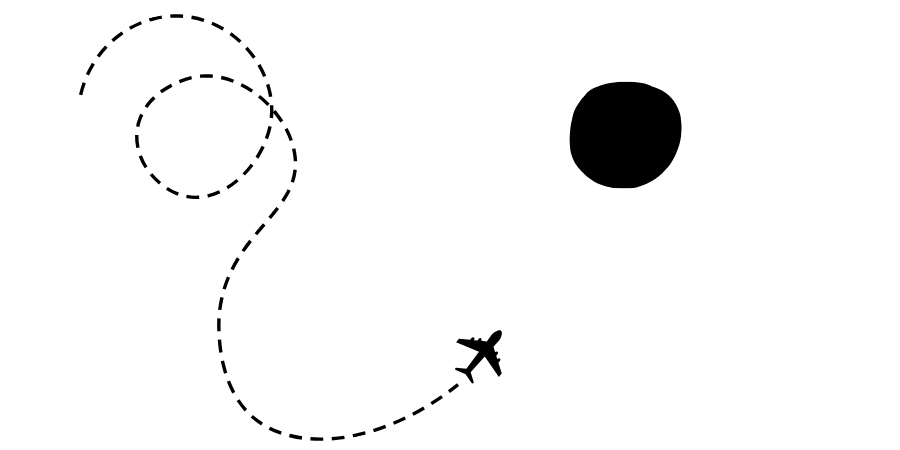
If you were handed a blank white page with one small black dot in the center, most people would point to the dot and ignore everything else. They won’t see the wide, empty space around that small dot.
Despite its harmless nature, such an instinct shapes perception. For pilots, this habit runs deep. In fact, aviation trains the mind to spot flaws, deviations, and risks fast. That skill saves lives in the air, but it turns against you on the ground.
One mistake, one delay, or one missed opportunity can suddenly feel bigger than an entire career. So, if you’re someone who has the same perspective about things, let’s talk about why that happens and how you can overcome it.
Key Takeaways
- Negativity Bias: The brain naturally focuses on mistakes and threats more than success. One negative moment can feel louder than years of solid performance, even when the evidence says otherwise.
- Pilot Conditioning: Aviation training strengthens this bias. Constant threat scanning makes small issues feel critical.
- Hidden Cost: Fixating on one setback erodes confidence, distorts identity, and slows progress. It also makes transitions beyond the cockpit feel harder than they truly are.
- Gain Perspective: Distance restores accuracy. Zooming out, like gaining altitude in flight, puts one moment back into context and reveals the full picture again.

Why the Brain Fixates on the Black Dot
The human brain is naturally wired to notice what is wrong before it notices what is right. According to psychologists, it’s negativity bias. It means negative events, mistakes, or threats grab more attention and feel more important than positive ones.
Although this makes sense from an evolutionary standpoint, the problem is that this bias does not scale well in modern life. One simple flaw, and it becomes more memorable than years of consistency.
That’s exactly what psychologist Roy Baumeister famously noted: “Bad is stronger than good.” Negative experiences have a stronger psychological impact than equally intense positive experiences.
For pilots, this bias is stronger. Aviation training reinforces constant threat detection. The mind keeps scanning for the black dot, even when the situation calls for a wider view.
How the Black Dot Shows Up in a Pilot’s Life
The black dot appears as one big, dramatic failure. Most of the time, it shows up in ordinary moments that quietly carry more weight than they deserve.
Career moments are often the first place they appear. It could be a failed checkride, a tough evaluation, or maybe missing an upgrade window, and you suddenly overshadow years of safe flying and performance.
Daily performance moments reinforce it further. A firm landing, a minor procedural slip, or a piece of critical feedback can trigger an internal cascade. That single moment starts to feel like proof of decline.
The final type is timing moments, which may be the most damaging. For instance, a delayed transition, a missed opportunity, or slower-than-expected progress can turn into a belief that everything is off track.
There’s an old story that captures this perfectly. The story starts with a young traveler who reaches the end of a long, successful day, only to hit a rocky stretch of road. Frustrated, he curses the sky and says, “If this is what the path is like, I’ll never make it.”
That’s when an old man nearby replies, “You’ve judged a thousand miles by seeing just one,” and that has a strong meaning.
The Real Cost of Black Dot Thinking
Black dot thinking does more damage than most pilots realize. First, it chips away at confidence. When one negative moment becomes the focus, forward movement starts to feel risky. Rather than building on past success, energy is spent replaying what went wrong.
Second, it distorts self-identity. A single event begins to rewrite the entire career story. The narrative shifts from ‘I’ve built something solid’ to ‘maybe I’m not as good as I thought.
In the end, it creates paralysis when thinking about life beyond the cockpit. Attention goes straight to gaps whenever you think about exploring a new path. You start to ignore the skills, discipline, leadership, and reliability you built.
How to Gain Altitude and Restore Perspective
When black dot thinking takes over, the fix is not motivation or positive talk. The fix is perspective. In aviation terms, it means gaining altitude. Distance changes how problems look, feel, and how much weight they carry.
Below is how this works in real life, and why it is so effective for pilots.
1. Distance Shrinks the Threat
Up close, a small issue feels massive. A single mistake fills the entire view. But when you zoom out, that same issue becomes just one data point among many.
This type of negativity bias makes you give more attention to negative events than positive ones. This explains why one bad moment can overpower years of success if perspective is lost.
2. Pilots Already Use This Skill
In the cockpit, problems are rarely solved by staring at them too closely. Crews step back, run the checklist, and look at the full flight plan. Altitude, airspeed, fuel, weather, and time all matter together.
The same logic applies outside flying. A rough landing or missed opportunity is never the full story. When viewed from a higher altitude, patterns appear. You start to notice trends, and one moment stops defining the whole flight.
3. Context Restores Accuracy
Remember, accuracy usually comes from context and not from intensity. Pilots gain perspective by zooming out, seeing hundreds of safe flights, strong decision-making under pressure, and years of reliability.
That context corrects a false conclusion formed by one event. Studies also show that people who practice cognitive reframing are significantly better at regulating stress and maintaining confidence after setbacks.
It’s Time to See the Whole Page Again
Pilots often face moments that feel bigger than they should. As these moments take over, perspective shrinks, and the black dot starts to feel like the entire page.
All you need to remember is that a single moment does not define your career. But if it feels hard to zoom out alone, that’s normal. Perspective is easier to regain with structure and reflection.
That’s exactly what the Life After the Sky Scorecard is designed to help. It gives you a simple way to understand where everything currently stands. By using it, in just under three minutes, you’ll have a breakdown of your strengths, blind spots, and the areas that deserve attention.
Invitation to Join Our FREE Strategy Session
Most pilots are one honest conversation away from clarity. This is that conversation.
Complete our “Life After the Sky” checklist, then join me for a FREE 15-minute “Strategy Session” via Zoom.
This session is for pilots who want to take ownership of what comes next.
Those who want action, not just to talk about it.
In just 15 minutes, we’ll:
- Review your checklist results
- Identify the one obstacle holding back your reinvention
- Translate your checklist results into a clear starting point
Start your pre-flight assessment for the next chapter of your journey by Booking your free strategy session here!