


Most people do not fail because they lack ability. They fail because they stop too early.
The pattern is quite common. Someone starts something new, puts in the effort, faces a few setbacks, and then begins to question whether it is worth continuing. At some point, they decide they have tried enough.
Now think about how a baby learns to walk. There is no limit to attempts. No deadline or point where someone decides it is not working.
They keep trying until it works.
Progress works the same way for adults. The only real difference is that we impose limits on ourselves. We decide failure too early and confuse discomfort with incapability.
If you’ve been placing artificial limits on what you can do, this is where that changes. We’ll help you identify those limits and apply a simple, practical approach to keep moving forward until it works.
Key Takeaways
- Remove Artificial Limits: Progress works when you stop setting deadlines on effort. Keep going instead of deciding early when to quit.
- Failure Is Part of the Process: Setbacks are not signals to stop. They are feedback that helps you improve and move forward.
- Most People Quit Too Early: Discomfort, comparison, and doubt cause people to stop before results have time to show.
- Consistency Leads to Results: Small, repeated actions over time create real progress, whether you are building something or learning a new skill.
The Baby Formula: What It Really Means
A baby learning to walk does not follow a timeline. There is no fixed number of attempts, a deadline, or a point where someone decides it is not working. The process is clear. Try, fall, rest, and try again.
Babies usually begin walking somewhere between 12 and 18 months of age. During that time, they fell hundreds of times. There is no concern about failure. Each attempt is part of the process.
You don’t watch your baby fall repeatedly and decide to stop the process. There is full certainty that walking will happen.
The only difference between adults and babies is that babies haven’t yet created any artificial limits. Most adults have a limit on how long they will try, how many attempts they will make, or when they will stop if results do not appear.
Why Adults Quit Too Early
Most people do not fail because something is impossible. They stop because they reach a point where continuing feels uncomfortable. This is more common than you think..
A few reasons behind it include:
1. Fear of Failure and Discomfort
Failure feels personal to adults. Each setback is seen as a signal that something is not working or that they are not capable. That feeling creates discomfort, and the natural response is to avoid it.
Studies show that around 20% of adults are chronic procrastinators. They often delay or avoid tasks that involve difficulty or risk.
2. External Pressure and Comparison
Comparison adds another layer of pressure. Seeing others succeed faster creates the impression that progress should happen quickly. When personal results do not match that pace, it leads to doubt.
As a result, only 8% of people achieve their long-term goals, though most start with clear intentions.
The Pilot’s Baby Formula: Keep Going Until It Works
I have seen many pilots approach building something like a business with limits. They try something new, face a few setbacks, and then start questioning whether it is worth continuing. That decision comes long before real progress has had time to develop.
This is where the “baby formula” needs to be applied.
First, you must drop the “stop point” mentality. Keep in mind that building anything outside your main role takes time. Early stages are often slow, unclear, and uncomfortable.
Secondly, every failed attempt is feedback, just like how a baby falls but still tries again. In aviation, you train for scenarios repeatedly until responses become automatic. You do not stop practicing after a few mistakes.
You keep going until the outcome becomes reliable.
So, whenever you think about building wealth outside the cockpit, apply the same discipline you use in flying. Follow proper procedures, repeat actions, and improve through experience. That discipline is what makes operations reliable.
Ways to Apply the Same Formula to Real Life
“Keep going until” is not about working endlessly without direction. It means staying in the process long enough for results to actually show up. When applied correctly, it removes pressure, builds consistency, and makes progress more predictable.
Here is how it works in practice.
1. Building Something Beyond Aviation
Starting something outside aviation feels uncertain. You are stepping into an area where results are not immediate, and feedback is unclear. Most people try for a short period, see slow progress, and stop.
You can apply the baby formula here.
Rather than expecting early results, focus on consistent action. That could mean working on a business idea a few times each week, improving it gradually, and learning through real attempts. This aligns with real behavior data.
According to the U.S. Bureau of Labor Statistics, around 20% of new businesses fail within the first year. It’s likely because they stop early or fail to adapt.
2. Learning New Skills
Skill development follows a predictable pattern. Early attempts feel slow and unstructured. Progress seems minimal at first, which is where most people lose momentum. The formula changes that.
Instead of judging progress too early, commit to repetition. Practice consistently, even when improvement feels small.
In just 66 days, you can form a new habit, and that goes for learning a new skill too. This shows that all you need to have some meaningful progress is sustained effort, and not short bursts of motivation.
Keep Going Until It Works
Most pilots already know what to do. They start, they try, they make some progress, and then they stop too early. Not because it is impossible, but because it feels uncomfortable or slower than expected.
The difference is not talent or intelligence. It is whether you stay in the process long enough for it to work.
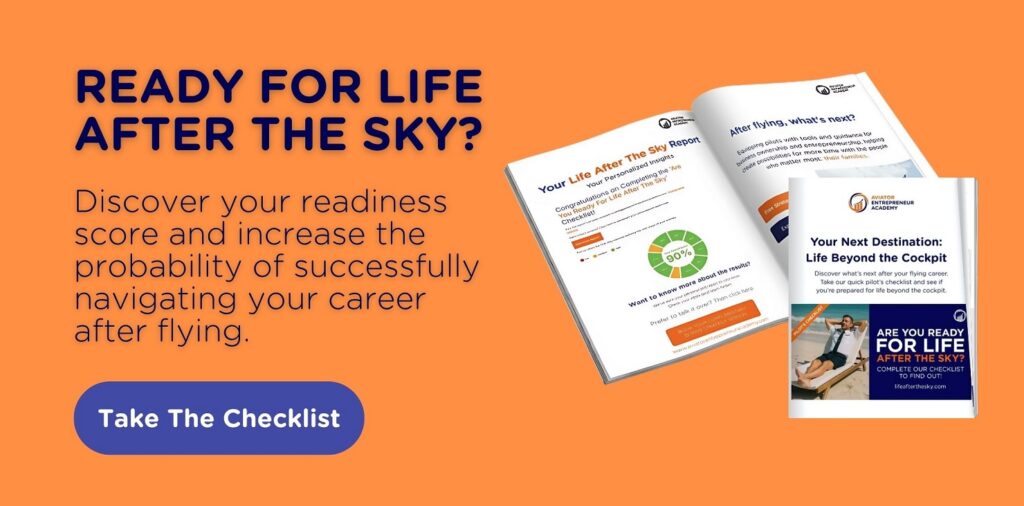
If you keep falling off the wagon, it might be time for you to take our Life After the Sky checklist. It’s a 20+ page PDF that will help you understand why you are stuck and which steps can help you move forward.
Invitation to Join Our FREE Strategy Session
Most pilots are one honest conversation away from clarity. This is that conversation.
Complete our “Life After the Sky” checklist, then join me for a FREE 15-minute “Strategy Session” via Zoom.
This session is for pilots who want to take ownership of what comes next, not just to talk about it.
In just 15 minutes, we’ll:
- Review your checklist results
- Identify the one obstacle holding back your reinvention
- Translate your checklist results into a clear starting point
Start your pre-flight assessment for the next chapter of your journey by Booking your free strategy session here!