


Have you ever heard the story of the monkey trap?
The story goes that once, a hunter placed a fruit inside a hollowed-out coconut with a small hole. The hole was just big enough for the monkey to reach in and grab the fruit; however, not enough to bring it out with a fist.
So, what does it do? It stays stuck, not by force, but by choice, not letting it go.
That’s literally the same for us. We hold onto things that feel safe, even when that very thing is keeping us trapped. For aviators, this usually looks like a steady paycheck, seniority, job security, or the identity of being “a pilot.”
If you feel like you’re in the same situation, this article will teach you how to let go and finally move forward. Keep reading.
Key Takeaways
- You’re Holding On: What keeps you stuck isn’t the job or situation; it’s your grip on what feels safe and familiar.
- Comfort Can Become a Trap: The paycheck, seniority, identity, or fear of “what if” can create a false sense of security that limits your growth.
- Awareness Creates Freedom: You can’t let go of what you haven’t identified. Naming what holds you back is the first step to change.
- Let Go With Intention: Build your bridge before leaving. Test your path, separate real risk from fear, and fully release the past.
The Modern Monkey Trap: What Humans Hold Onto
Just like the monkey in the story, we often find ourselves caught by our own unwillingness to let go. We cling to what feels safe, such as a steady income, a predictable schedule, and a familiar job title.
These things give us security in the short term, yet over time, they become a trap. The very things meant to protect us start to limit us, because we’re too afraid to release them.
In fact, research shows that only 33% of employees feel they are “thriving” in their work lives. This illustrates how many people remain stuck, even when they sense a deeper dissatisfaction with their current jobs.
One of the biggest issues most people face is when their title becomes their identity. They start to believe they cannot be anything else. The identity we wear can define our value in our own eyes, and so letting it go feels like losing ourselves.
The Bait You’re Holding
We don’t get stuck because we lack options; we get stuck because we’re gripping something we don’t want to lose. This “bait” creates a false sense of security. It convinces us that letting go is dangerous, even when holding on is what keeps us trapped.
Here are the most common things people hold onto without realizing:
1. The Paycheck
A predictable paycheck feels safe, but it is a career comfort trap. It shows up every month, covers costs, supports your lifestyle, and makes the world feel stable. Over time, the paycheck becomes the anchor.
You start shaping your entire life around maintaining the income, rather than designing a life you actually want. The fear of losing that steady cash flow overrides your desire for freedom or fulfillment.
2. The Seniority
We know you’ve spent years, maybe decades, building your position. And walking away now might feel like throwing all that effort into the trash. This is the sunk cost fallacy.
We tell ourselves, “I can’t leave now, I’ve come too far.” Yet staying for the sake of what you’ve already invested only wastes the years ahead. Seniority feels like an asset, yet it can quietly become a trap.
3. The Identity
When your job title becomes who you are, letting go feels like losing yourself. For aviators, this is especially true. Your aviation credentials carry pride, status, and validation. So, leaving feels more personal.
However, you need to understand that your identity is not defined by your occupation. You were someone before you became a pilot, and you will continue to be someone even if you choose a different path.
4. The “What If”
The most powerful bait isn’t the paycheck or the title, it’s the unknown. “What if it doesn’t work? What if I fail?” These questions freeze you in place because fear imagines worst-case outcomes and convinces you they are inevitable.
However, the life you want always lives on the other side of uncertainty. Instead of asking, “What if it goes wrong?” ask, “What if this is the best decision of my life?”
How to Unclench Your Fist and Let Go
When you realize the trap isn’t the job or the paycheck, though the grip you have on it, you regain control. Letting go isn’t reckless. It means choosing to loosen your grip on what is holding you back so you can free your hand for something better.
Let’s discuss the steps you can take to begin releasing the bait and move forward.
Step 1: Name What You’re Holding
You cannot let go of what you refuse to acknowledge. The first step is simple: identify the bait. Is it the paycheck? The title? The fear of failure?
Ask yourself, “What am I still gripping that no longer serves me?” Write it down. When something becomes visible, it becomes manageable. Naming the bait removes its power, and suddenly, it’s not vague fear.
As Carl Jung puts it:
“Until you make the unconscious conscious, it will direct your life, and you will call it fate.”
Step 2: Separate Real Risk From Imagined Risk
Most people stay stuck due to the fear that only feels real. The mind imagines the worst outcomes and treats them as guaranteed. Rather than asking, “Is this actually risky?” we ask, “What if everything goes wrong?”
Real risk is measurable, and imagined risk is emotional. Once you compare the risk of leaving versus the cost of staying, the truth becomes obvious.
Step 3: Build the Bridge Before You Cross
Letting go does not require a leap. It requires a bridge. Start building your path to your next level while you’re still standing on the current one. Explore business ideas and validate them. Then, find one client, one revenue stream, and one proof of concept.
It’s human psychology to feel more confident after seeing evidence that the new path is working. That’s why this bridge makes the unknown less intimidating, so you’re no longer jumping.
Step 4: When It’s Time, Unclench Your Fist Fully
The moment will come when you have to release the bait. And when it does, you must commit. Half letting go is the same as still holding on. No “backup job.” No “just in case” plans that keep you tied to the old life.
The monkey only escapes when it fully opens its hand. You need the same to grow. Once you’re confident that the new path works, step onto it with both feet. Freedom only comes when you stop gripping the past.
Break Free From What’s Holding You Back
Many aviators don’t realize they’re not stuck because of a lack of opportunity; they’re stuck because of holding onto what feels safe.
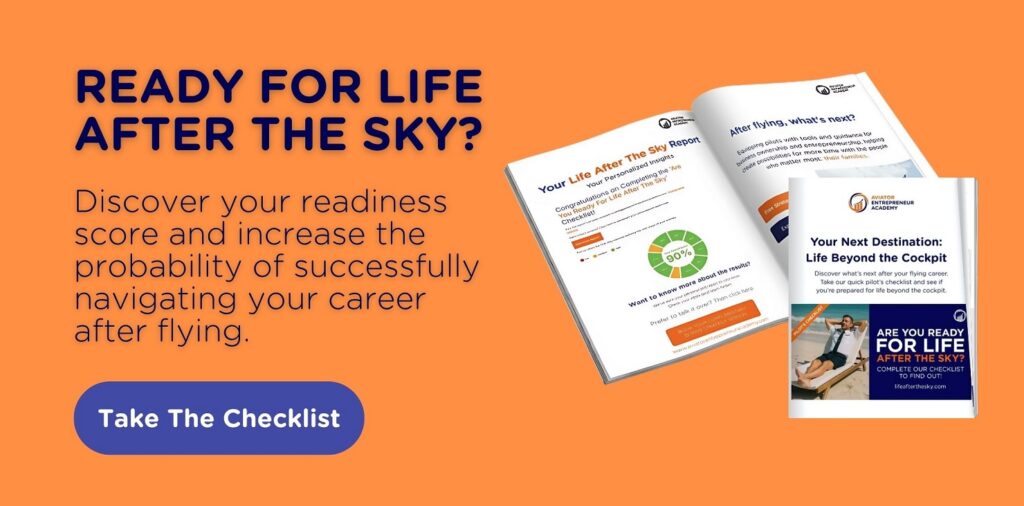
Anyhow, it’s time to get clear on what’s holding you back and how to release it. The best way to do that is by taking the Life After the Sky Checklist.
With it, in just three minutes, you’ll get a personalized 25-page report revealing what you’re gripping too tightly, where your hidden traps are, and what steps will help you move forward with confidence.
So, stop procrastinating and take the checklist today!
Invitation to Join Our FREE Strategy Session
Most pilots are one honest conversation away from clarity. This is that conversation.
Complete our “Life After the Sky” checklist, then join me for a FREE 15-minute “Strategy Session” via Zoom.
This session is for pilots who want to take ownership of what comes next.
Those who want action, not just to talk about it.
In just 15 minutes, we’ll:
- Review your checklist results
- Identify the one obstacle holding back your reinvention
- Translate your checklist results into a clear starting point
Start your pre-flight assessment for the next chapter of your journey by Booking your free strategy session here!