


We meet people all the time who say they’re “working on something.” That means they’re planning, preparing, learning, and collecting information to feel busy and proactive. However, nothing ever gets launched.
Years pass, and the project stays in the same place.
So, why does that happen? It’s simple. Learning is safe, while launching is not. And when you stay in the learning zone for too long, you convince yourself you’re moving forward even when nothing is actually happening.
To make sure you don’t end up in this learning trap, we’ll break down why this happens and how you can finally move on from this phase.
Key Takeaways
- Learning Isn’t Action: Constant learning feels productive, but it keeps you in a safe comfort zone where nothing real happens.
- Launch Makes It Real: Unlaunched dreams feel exciting but remain unreal. The longer you wait, the easier it becomes to stay stuck. Progress only begins when you take action.
- You Know Enough: You don’t need more courses or more clarity. Overthinking and information overload create paralysis. Take small steps, as they can teach you more than endless preparation.
- Start Simple First: Start messy. Set a date, release a basic version, and listen to real feedback. That cycle is what builds momentum and moves your dream forward.
Why You’ve Been ‘Working on It’ for Years
Many people say they’re “working on it,” but they’re actually stuck in a loop that only feels productive. I’ve been there too, and trust me, there’s nothing more comforting and more harmful than that.
It gives you the feeling of progress without the pressure of putting something real into the world. You watch a video or finish a course, and your brain rewards you with a small dopamine hit.
As a result, many people don’t realize that learning has become their comfort zone. It makes you feel busy and responsible, but nothing is actually at stake.
As psychologist Carl Jung said:
“You are what you do, not what you say you’ll do.”
Your Dream Stays a Fantasy Until You Take Action
A dream only becomes real when you begin creating something, not when you think about it or talk about it. This is the gap most people never cross.
Intention feels meaningful because it gives you the sense that you’re moving forward, but nothing actually changes in your life. In fact, our brain often mistakes planning as progress, which is why business ideas can feel “alive” even though they haven’t moved forward an inch.
Unlaunched ideas stay perfect because they haven’t been tested. There’s no feedback, no resistance, and no flaws are exposed.
And that perfection becomes addictive.
The longer you wait, the more comfortable the waiting becomes. You start believing you need more clarity, more time, more confidence, or more learning. In reality, you’re just reinforcing the habit of not moving.
You Already Know Enough to Begin
Most people believe they need more information before they start, but the lack of knowledge isn’t what keeps them stuck. Extra learning alone rarely leads to momentum.
As a matter of fact, Harvard Business Review noted that information overload causes analysis paralysis, making people less likely to take action.
The real obstacle is the constant cycle of consuming instead of creating. When all your time goes into learning, your idea never gets the push it needs.
Examples include sending one message, making one offer, and building a straightforward version of your idea. These tiny actions teach you more than weeks of learning.
The Launch Framework: From Planning to Execution
If there’s one part of your journey that separates dreamers from builders, it’s this. Most people stay in the planning stage for years because it feels safe, controlled, and predictable.
This framework is designed to pull you into action, so you can finally create momentum and start building wealth beyond the cockpit.
Here’s how:
Step 1: Name What You’re Protecting
Every time a launch gets delayed, something is being protected. It might be ego, fear of judgment, or the worry that the idea won’t work. In simple terms, this isn’t about “waiting for the right time,” but about shielding the dream from possible failure.
To break this cycle, write down exactly what you’re afraid of. Be brutally honest.
Once you identify what’s being protected, the fear loses size and stops working quietly in the background. Awareness brings it into the open, and anything acknowledged becomes easier to change.
Step 2: Accept That the First Version Won’t Be Perfect
Perfection is the biggest launch killer. If you wait until everything is polished, refined, and flawless, you’ll be waiting forever. The first version is supposed to be messy and teach what your audience actually wants to learn.
If you think the businesses you admire today started out as successful, you are wrong. They were once small, basic, and imperfect, but they just went all in.
The sooner you accept that imperfection is part of the process, the sooner you break the cycle of hesitation and over-preparation.
Step 3: Set a Clear Launch Date
Without a deadline, you will always find more to tweak. A launch date removes the option to hide behind preparation. It forces you to prioritize what actually matters and drop everything that doesn’t.
Pick a date within the next 30 days and write it somewhere visible. It could be your desk, calendar, or wall.
You can also tell someone so they can hold you accountable.
Step 4: Launch Simply, Not Perfectly
Your first launch should be the simplest version of your idea. An introductory offer, a simple sales page, one email, one conversation, one post, literally anything. Simplicity creates speed, while complexity only kills momentum.
Don’t try to build a full brand, a perfect funnel, or a polished product on day one. Those things come later. Right now, your goal is to release something into the world so you can learn from real reactions.
Step 5: Learn From Real-World Feedback
Once you launch, everything changes. You start learning from real people rather than from your imagination. At this point, the feedback replaces guessing, and conversations replace assumptions.
Your job now is to listen, refine, and adjust. Don’t assume what the audience wants; base your work on what they actually say, do, and buy.
This is where you start to build momentum.
Stop Holding the Dream, Start Building It
At some point, you have to decide whether you want to protect the dream or actually live it. The only way the idea becomes real is when you choose action over hesitation. Your idea doesn’t need more polishing; it requires a decision.
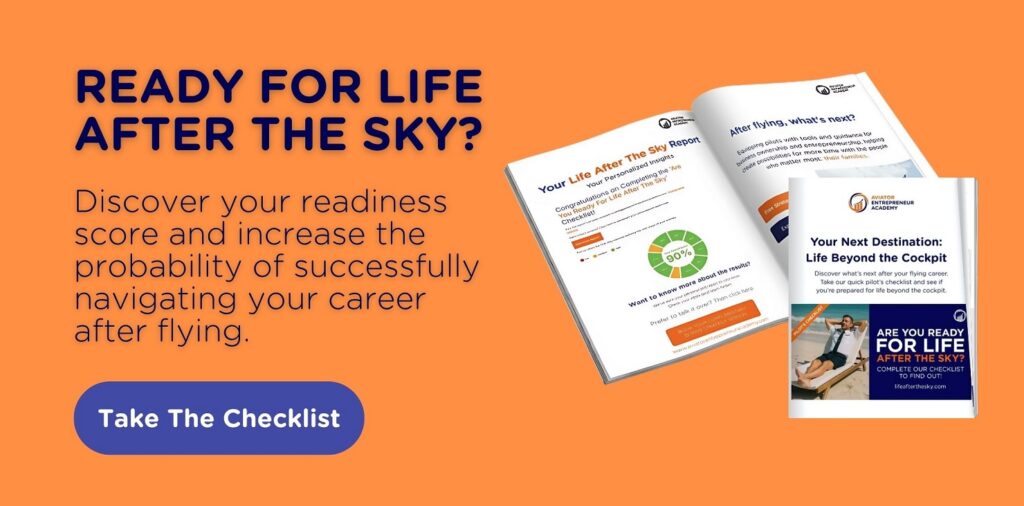
And if you want a clear starting point, you don’t need another book or course. All you need now is to take the “Life After the Sky Checklist.”
Within three minutes, you’ll get a personalized 25-page report. It will reveal what’s holding you back, and the exact steps to turn your knowledge into action.
Invitation to Join Our FREE Strategy Session
Most pilots are one honest conversation away from clarity. This is that conversation.
Complete our “Life After the Sky” checklist, then join me for a FREE 15-minute “Strategy Session” via Zoom.
This session is for pilots who want to take ownership of what comes next.
Those who want action, not just to talk about it.
In just 15 minutes, we’ll:
- Review your checklist results
- Identify the one obstacle holding back your reinvention
- Translate your checklist results into a clear starting point
Start your pre-flight assessment for the next chapter of your journey by Booking your free strategy session here!