


For pilots around the world, financial stability isn’t just about salary — it’s about flexibility, resilience, and control over monthly cash flow.
Instead of focusing solely on large long-term numbers, many pilots explore ways to build additional income streams alongside flying, using skills and experience they already have. This approach supports lifestyle flexibility and reduces reliance on a single source of income.
This playbook outlines common income paths pilots worldwide use to work toward consistent monthly income over time.
Key Takeaways
- Monthly cash flow matters: Many pilots focus on building steady, flexible income alongside flying rather than relying on a single long-term financial milestone.
- Multiple income paths exist: Digital products, consulting, content creation, affiliate partnerships, and subscriptions are common ways pilots explore additional income.
- Pilot skills transfer well: Training experience, operational knowledge, and real-world aviation insights can be applied outside the cockpit.
- Flexibility is essential: Income streams that fit around variable rosters and time zones are often better suited to pilot lifestyles.
- Growth is incremental: Most pilots start small, test ideas, and improve over time rather than expecting immediate results.
- Trust and transparency matter: Long-term success often comes from providing genuine value and clear communication with audiences or clients.
- Results vary by individual: Outcomes depend on effort, experience, location, and market demand.
- The goal is optionality: Additional income can support lifestyle flexibility, resilience during industry cycles, and greater career control.
Why Monthly Income Matters for Pilots
Pilots face unique challenges:
- Variable schedules
- Time away from home
- Industry cycles and uncertainty
Because of this, monthly cash flow often matters more than distant financial milestones. Small, repeatable income sources can support day-to-day expenses, offer buffer during slow periods, and create optionality throughout a flying career.
Focusing on income streams rather than one-off outcomes makes financial planning more practical and adaptable across different countries and aviation markets.
Five Common Income Paths Pilots Explore
There is no single method that works for everyone. The options below represent widely used approaches pilots choose based on skills, interests, and available time.
1. Digital Products for Pilots
Digital products allow pilots to share knowledge at scale. Common examples include:
- Interview preparation guides
- Training checklists
- Career planning resources
- Lifestyle or fatigue-management tools
Once created, digital products can be updated and refined over time, making them suitable for pilots with limited availability.
2. Consulting or Coaching Services
Many pilots already provide informal guidance to others in areas such as:
- Career progression
- Interview preparation
- Training transitions
- Work–life balance
By offering structured consulting or coaching, some pilots turn experience into a professional service that fits around a flying schedule.
3. Content Creation and Audience Building
Pilots have access to real-world stories and insights that resonate globally. Content channels may include:
- Aviation-focused newsletters
- Video platforms
- Educational blogs or communities
Over time, a trusted audience can support income through partnerships, advertising, or pilot-created resources.
4. Affiliate and Referral Income
Pilots often use similar equipment, tools, and services worldwide. Affiliate income may come from recommending:
- Aviation gear
- Training tools
- Software or planning resources
This approach focuses on transparency and long-term trust rather than volume.
5. Subscriptions and Ongoing Communities
Recurring income models provide stability. Examples include:
- Paid pilot communities
- Membership newsletters
- Ongoing career support groups
Subscriptions grow gradually and benefit from consistency rather than scale.
A Practical Perspective on Building Income
Additional income is rarely built all at once. Most pilots start by testing one idea, learning what works, and improving over time.
Progress often involves:
- Starting small
- Refining based on feedback
- Adding new streams gradually
Results vary based on effort, market demand, and individual circumstances.
The Mindset Shift: From Waiting to Building
Many pilots are trained to plan long-term and prioritise security. While valuable, this mindset can delay experimentation.
Shifting toward building means:
- Exploring ideas early
- Developing skills incrementally
- Creating systems that grow with experience
Each small project becomes part of a broader financial foundation.
Getting Started
You don’t need a perfect plan to begin. What matters is identifying which income paths align with:
- Your experience
- Your schedule
- Your interests
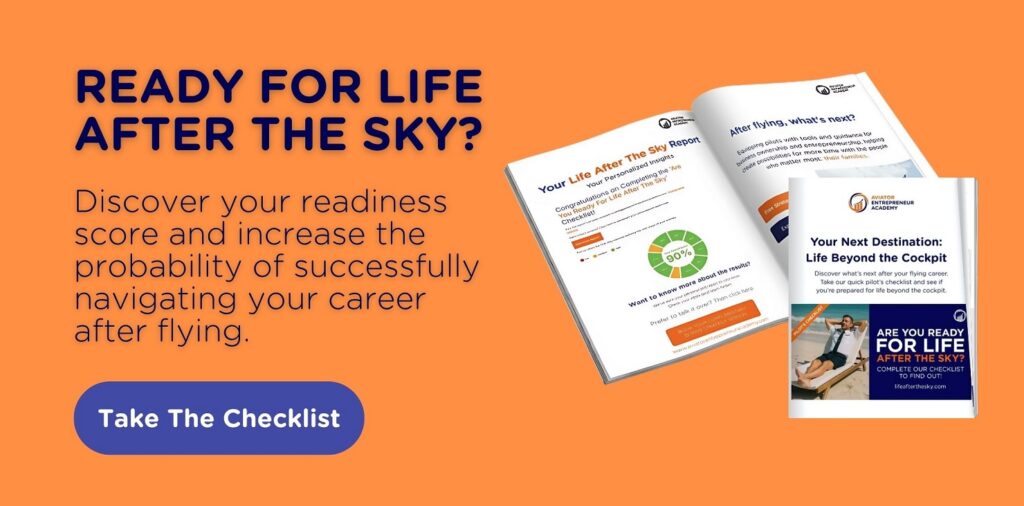
To help with that process, the Aviator Entrepreneur Readiness Checklist is designed to clarify suitable income options and next steps based on individual circumstances.
The goal isn’t a specific number.
The goal is flexibility, sustainability, and choice.
Invitation to Join Our FREE Strategy Session
Most pilots are one honest conversation away from clarity. This is that conversation.
Complete our “Life After the Sky” checklist, then join me for a FREE 15-minute “Strategy Session” via Zoom.
This session is for pilots who want to take ownership of what comes next.
Those who want action, not just to talk about it.
In just 15 minutes, we’ll:
- Review your checklist results
- Identify the one obstacle holding back your reinvention
- Translate your checklist results into a clear starting point
Start your pre-flight assessment for the next chapter of your journey by Booking your free strategy session here!
Disclaimer
This content is for educational and informational purposes only and does not constitute financial, investment, or legal advice. Income examples are illustrative only. Outcomes vary based on individual effort, experience, location, and market conditions.