

In aviation, rules are non-negotiable. They exist because they have been tested, validated, and proven to protect lives. But outside the cockpit, not every “rule” you follow goes through the same level of scrutiny.
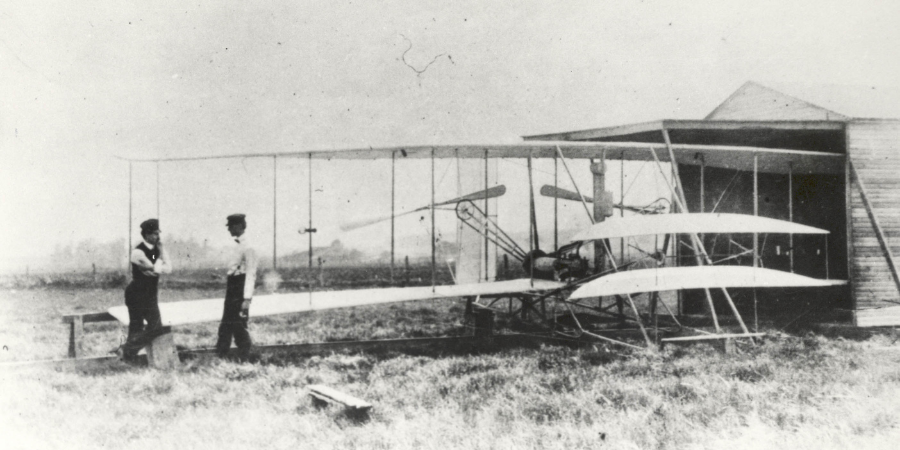
The Wright Brothers were the first to experience this, long before aviation existed. On December 17, 1903, they achieved the first powered flight at Kitty Hawk, North Carolina, at a time when most experts believed it would take a million years for humans to fly.
If they had accepted those statements as rules, we would not have airplanes today. That’s exactly what pilots are facing today. You are surrounded by assumptions disguised as rules, and we’ll help you break free from them.
Key Takeaways
- Impossible Isn’t a Rule: People once believed human flight was impossible until the Wright Brothers proved otherwise. Many “rules” we follow today are commonly accepted but rarely questioned.
- Most Limits Are Suggestions: The beliefs pilots follow often come from internal doubt, outside expectations, or industry norms. They feel like rules only because they’ve been repeated.
- Test the Rule Before You Obey: Ask three things: Who told me this? Is there real evidence? Who benefits if I follow it? Once you evaluate a belief logically, most limitations disappear.
- Freedom Starts with Questioning: Real freedom begins when you stop waiting for permission and start challenging the beliefs holding you back.

The Rule That “Couldn’t Be Broken”
In 1903, the idea of human flight wasn’t just unlikely; it was considered impossible. Newspapers, engineers, and even respected scientists publicly stated that humans would never be able to fly. It was treated as a law of nature, just like gravity.
Yet, in a small bicycle shop in Dayton, Ohio, two brothers refused to accept that rule. Orville and Wilbur Wright didn’t have formal engineering degrees, aviation mentors, or large funding.
They didn’t break a law of physics; they broke a rule created by humans. Nine weeks after the New York Times article, on December 17, 1903, they flew in Kitty Hawk, North Carolina, and left every statement behind, breaking the rules set by humans.
This man-made flying machine took a flight of twelve seconds.
Pilots today face their own version of “rules.” They’re not written anywhere, but they show up in statements like:
- “You stay at the airlines until retirement.”
- “Entrepreneurship is too risky for a pilot.”
- “The only path to wealth is pensions and index funds.”
And once you start questioning those beliefs, you open the door to possibilities that most people never see.
The Rules You Follow Without Realizing It
Most pilots don’t operate under real limitations. They operate under perceived ones. These rules were never consciously chosen, but rather inherited from the environment, colleagues, family, and even internal doubt.
Here are the three categories:
1. Internal Rules (“I tell myself…”)
These are the rules that originate from your own beliefs, shaped by repetition and fear of the unknown. They usually sound like:
- “I’m not good at business.”
- “I don’t know enough to start.”
When pilots are trained, they are taught to minimize mistakes and follow checklists. That conditioning creates a belief that if you don’t have the right information, you cannot act. However, in entrepreneurship, progress comes from action and feedback.
2. External Rules (“Others expect me to…”)
The external rules come from people around you, such as your family, colleagues, mentors, or corporate culture. They come disguised as advice, like:
- “Good pilots don’t leave the airlines.”
- “You should be grateful, you already have a great job.”
These expectations can create pressure to maintain stability, follow the linear path, and avoid anything unconventional. The problem with this is that they push you to make decisions based on their fear, not on your goals.
3. Default Rules (“This is what success looks like…”)
Lastly, the default rules are the hardest to identify because they don’t come from anyone directly. They come from the environment of aviation itself. They sound like:
- “Move up the seniority list.”
- “Maximize retirement or end-of-service benefits.”
- “Freedom happens at retirement.”
Such rules create a predictable, stable path, but they also delay fulfillment. Many pilots follow this trajectory without ever questioning whether it aligns with the life they want.
The Rule Audit Method (Identify Which Rules Aren’t Real)
The Rule Audit Method is a simple, logical tool you can use to evaluate any limiting belief. It could be about your career, money, or what you’re capable of outside the cockpit. Rather than being emotional, you analyze the belief like you would troubleshoot a system in an aircraft.
There are just three steps, and all your false rules will collapse immediately.
Step 1 – Ask: Who told me this?
Every belief has an origin. It may come from a family member who valued stability, a coworker afraid to try something new, or an industry culture that rewards conformity. When you identify the source, the belief loses authority.
Example: “Pilots shouldn’t start businesses.”
Source: A coworker who’s never built a business.
After you recognize that the rule came from someone who doesn’t live the life you want, you stop treating their opinion as a truth you must follow.
Step 2 – Ask: Is there evidence?
Most beliefs that limit you haven’t been tested. You accepted them because they were repeated, not because they were proven.
That’s why you should ask yourself:
- Have I collected any data?
- Have I tested this rule?
- Have I seen someone break this rule successfully?
If the answer is no, then what you’re dealing with is only an assumption. If there’s no evidence, it’s not a rule.
Step 3 – Ask: Who benefits if I follow it?
This is the most important question of all. If you don’t work on any of your business ideas only because “it’s risky,” then who benefits from it?
- The airline keeps you in the cockpit.
- Your circle avoids the discomfort of seeing you grow.
- Institutions profit from keeping you passive.
When you ask, “Who benefits?” you immediately see whether the rule serves you or keeps you grounded.
Freedom Begins Where Unquestioned Rules End
The Wright Brothers didn’t wait for permission to try something impossible. They didn’t ask the scientific community to approve their idea or wait for the world to tell them it was okay to attempt flight.
Many pilots unknowingly do the opposite today. They wait for permission.
As Henry Ford put it:
“Whether you think you can, or you think you can’t—you’re right.”
The moment you start questioning the rules you’ve accepted, everything shifts. Not because the external world changes, but because your internal ceiling moves. So, start asking the right questions if you want to reach new heights.
Invitation to Join Our FREE Strategy Session
Most pilots are one honest conversation away from clarity. This is that conversation.
Complete our “Life After the Sky” checklist, then join me for a FREE 15-minute “Strategy Session” via Zoom.
This session is for pilots who want to take ownership of what comes next.
Those who want action, not just to talk about it.
In just 15 minutes, we’ll:
- Review your checklist results
- Identify the one obstacle holding back your reinvention
- Translate your checklist results into a clear starting point
Start your pre-flight assessment for the next chapter of your journey by Booking your free strategy session here!